
How to Read a Bank Statement is a practical money skill that becomes much easier once you understand the basic process. This beginner-friendly guide explains how to read a bank statement, what to look for and common mistakes to avoid.
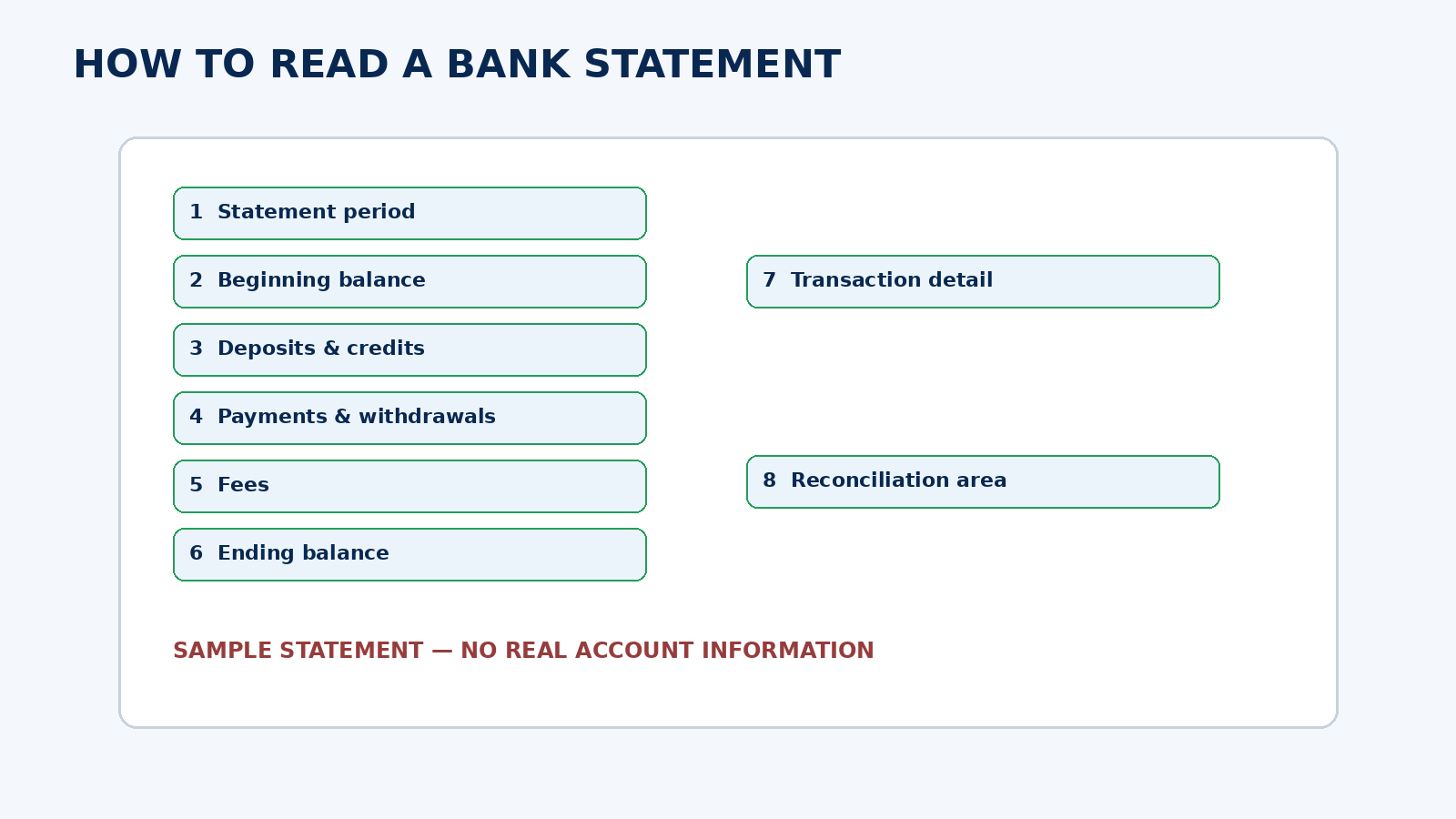
- Confirm the statement period and account identification.
- Find the beginning balance.
- Review deposits and other credits.
- Review checks, debit-card purchases, electronic payments and withdrawals.
- Look for account fees or interest.
- Review the ending balance.
- Compare the transaction detail with your own records and investigate unfamiliar activity promptly.
Safety and Accuracy Tips
- Never publish or share an image of a real check that exposes your routing number, account number, signature or other private information.
- Use official bank, credit-union or employer instructions when a procedure depends on a specific institution.
- Review amounts and account details before submitting a transaction.
- Keep receipts or confirmations until you have verified the transaction on your account.
- Contact the financial institution promptly if you see a transaction you do not recognize.
Bottom Line
Knowing how to read a bank statement is part of building a strong financial foundation. Practice with sample information first when appropriate, keep accurate records and verify institution-specific procedures before acting.
Article information
Published: September 7, 2026 Updated: September 7, 2026
Reviewed by: Allocate Yourself Editorial Team Last reviewed: 2026-09-07
Sources & further reading
Important: Allocate Yourself provides educational information only. Nothing on this site is personalized investment, legal, accounting, or tax advice. Investing involves risk, including the possible loss of principal. Read the full financial disclaimer.